The best roofing material for Florida’s climate is the one that matches your home, your budget and how long you plan to stay, while standing up to the four things Central Florida throws at every roof: intense sun, constant humidity, heavy summer storms and hurricane season. There’s no single winner. Shingle, metal, tile, stone-coated steel and flat systems each make sense for different homes, from Orlando and Winter Park to Kissimmee, Clermont, Sanford and DeLand.
Quick answer: Architectural asphalt shingles are usually the most budget-friendly full roof. Metal (standing seam or exposed fastener) appeals to long-term owners who want a clean look and lower upkeep. Concrete tile suits Mediterranean and Spanish-style homes and is heavy, so structure matters. Stone-coated steel gives a tile or shake look at a lighter weight. Flat and low-slope sections need membrane systems. Whatever you choose, a correct, code-compliant installation matters as much as the material.
What Florida’s climate does to a roof
- UV and heat: Long, hot summers break down materials and sealants and push heat into attics. Reflective colors and good ventilation help.
- Humidity and algae: Moist air and shade feed algae streaks and can rot decking where water gets in.
- Wind and rain: Afternoon thunderstorms and tropical systems test fastening, edges and flashing. The Atlantic hurricane season officially runs from June 1 to November 30.
- Salt air: Inland Central Florida sees far less salt exposure than the coast, but if you split time between Orlando and a beach home, ask about corrosion-resistant metals and fasteners for the coastal property.
Florida runs a statewide product approval program that covers roofing products, including shingles, underlayments, metal roofing and roof tiles. In the City of Orlando, a roof replacement needs a building permit, and the re-roof application lists the Florida Product Approval numbers for the products used. Ask your contractor which approvals and code requirements apply to your address.
Roofing materials compared
The comparison below is relative, not a price list. Actual cost and performance depend on your roof’s size, design, the specific product line and installation quality.
| Material | Upfront cost | Weight | Look | Best fit |
|---|---|---|---|---|
| Architectural asphalt shingles | Lowest of the full systems | Light | Classic, many colors | Most homes and budgets |
| Exposed-fastener metal | Moderate | Light | Ribbed panels, rustic or modern | Value-minded metal look, outbuildings |
| Standing seam metal | Higher | Light | Clean, modern lines | Long-term owners, modern designs |
| Concrete tile | Higher | Heavy | Mediterranean, Spanish, traditional Florida | Tile-style homes and HOAs that require it |
| Stone-coated steel | Higher | Light | Tile, shake or shingle profiles | Tile or shake look without tile weight |
| Flat / low-slope membranes | Varies | Light | Not visible from the street | Porches, additions, low-slope sections |
Asphalt shingles
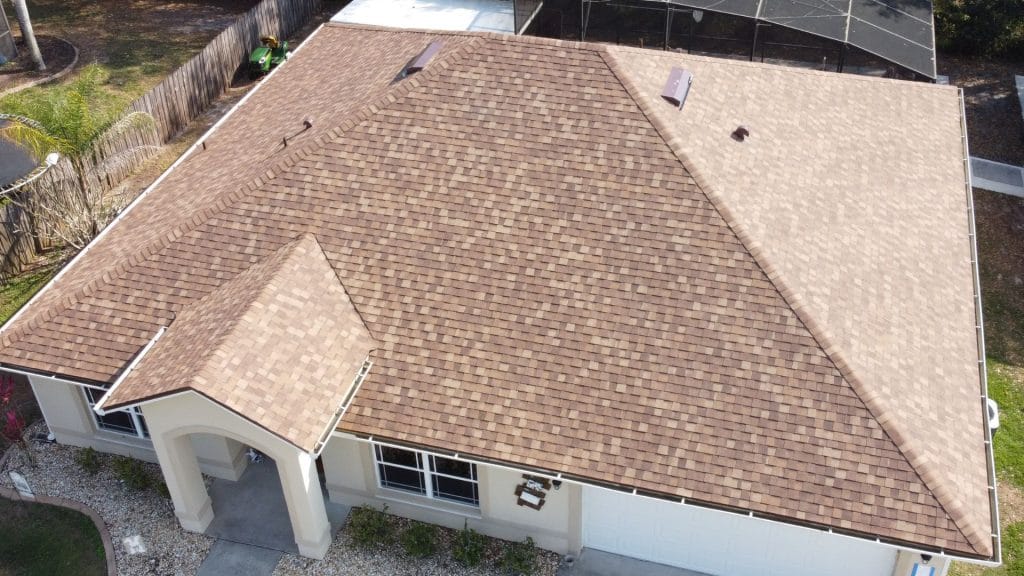
Architectural shingles are a popular choice in Central Florida: they’re cost-effective, come in many colors and are widely accepted by HOAs. Gravity installs CertainTeed Landmark and Landmark PRO shingles as part of complete CertainTeed systems, and Gravity is a CertainTeed ShingleMaster contractor.
Consider them if: you want the best value for a full replacement, you may sell in the coming years, or your HOA prefers a shingle look.
Watch for: algae streaking on shaded slopes, and correct fastening and edge details for Florida wind requirements. Learn more about shingle roofing in Central Florida.
Metal roofing: standing seam and exposed fastener
Metal is a popular upgrade in Central Florida. Its smooth panels shed rain quickly, and lighter, more reflective finishes can reflect more of the sun’s heat than dark ones.
- Standing seam (such as Tri-County Metals TCM-LOK) hides its fasteners under raised seams, which means fewer exposed points for water and a clean, modern look.
- Exposed fastener panels (Ultra Rib, 5V, PBR) typically cost less than standing seam, with screws through the panel face that should be checked periodically over the years.
Consider metal if: you plan to stay a long time, like a modern or coastal-farmhouse style, or want less maintenance.
Watch for: HOA approval, the quality of trim and flashing details, and rain noise (ask how the underlayment and solid decking affect it). Compare both on our metal roofing page.
Concrete tile
Tile is part of Florida’s architectural character, especially on Mediterranean and Spanish-style homes. Gravity installs Eagle concrete tile in profiles including Bel Air, Capistrano and Malibu.
Consider tile if: your home was designed for it, your HOA requires it, or you want that look for the long term.
Watch for: weight (switching from shingles to tile may require a structural check), broken tiles from foot traffic, and the underlayment beneath the tile, which does much of the waterproofing and wears out over time. See tile roofing.
Stone-coated steel
Stone-coated steel combines a steel panel with a stone-chip finish that looks like tile, shake or shingle. Gravity installs Unified Steel stone-coated profiles including Barrel-Vault Tile, Pacific Tile, Pine-Crest Shake, Cottage Shingle and Granite-Ridge Shingle.
Consider it if: you want a tile or shake look without the weight of concrete tile, or you’re replacing tile on a structure where weight is a concern.
Watch for: installer experience with the system’s specific details. Learn more about stone-coated steel roofing.
Flat and low-slope roofs
Many Central Florida homes have a low-slope section over a lanai, porch or addition. Shingles and tile are designed for steeper slopes, so these areas typically use a membrane system instead. Gravity uses systems such as CertainTeed Flintlastic SA modified bitumen and TPO membranes.
Watch for: ponding water, seams and edge details, and how the flat section ties into the main roof. See flat roofing.
How to choose: five questions to ask yourself
- How long will I own this home? Short horizons often favor shingles; long horizons can justify metal, tile or stone-coated steel.
- What does my HOA allow? Check before you fall in love with a color or profile.
- Can my structure handle the weight? Especially when moving to concrete tile.
- What matters most: upfront cost, maintenance, look or heat? Rank them; there’s no option that wins all four.
- How does it affect insurance? Ask your agent how the roof type, age and wind mitigation features affect your premium. A wind mitigation inspection after replacement documents those features.
Installation matters as much as material
A premium material installed poorly will underperform a modest material installed well. Whatever you choose, ask your contractor about underlayment, fastening, flashing at walls and penetrations, ventilation, permits and inspections. Ask them to explain, in writing, the manufacturer warranty that applies to your roof and their own workmanship commitment, because coverage differs by product and by contractor.
Cost is often the deciding factor, so read what drives roof replacement cost in Orlando next. If you’re not sure your roof needs replacing yet, start with the 7 signs it’s time for a new roof.
Frequently asked questions
Is metal roofing better than shingles in Florida?
It depends on your priorities. Metal typically costs more upfront, and many owners choose it for its look and lower upkeep; shingles cost less and suit more budgets and HOAs. Either can be a good Central Florida roof when it’s the right product, installed to code. Ask about the expected service life and maintenance of the specific system you’re quoted.
Can I switch from shingles to tile?
Often, but concrete tile is much heavier, so the roof structure may need to be evaluated first. Stone-coated steel is an alternative that gives a tile look at a lighter weight.
Which roof color is best for Florida heat?
Lighter, more reflective colors generally absorb less heat than dark ones. Attic ventilation and insulation also play a big role in how hot the house feels.
Does the material affect my insurance?
It can. Roof type, age and wind-resistance features may affect premiums. Ask your insurance agent and request a wind mitigation inspection after your new roof is installed.
Talk through your options
Not sure which system fits your home, HOA and budget? Our team will walk you through the tradeoffs without pressure.