


5 Urgent Signs: What Does Hail Damage Look Like on a Roof (2026)
Central Florida is famous for its afternoon thunderstorms, and during the peak of summer, those storms can occasionally drop hail. While a brief hailstorm might seem harmless, even quarter-sized hailstones can wreak havoc on your roofing system. Because the impact is often hard to see from the ground, many homeowners ask: what does hail damage look like on a roof?
According to the National Weather Service, severe thunderstorms can produce hail capable of damaging roofs, gutters, siding, and other exterior surfaces. Even small hailstones can weaken asphalt shingles and reduce the lifespan of your roof.
What does hail damage look like?
If left untreated, hail damage on roof shingles can lead to severe leaks, wood rot, and a significantly shortened roof lifespan. At Gravity Roofing, we inspect hundreds of storm-damaged homes every year. Here is exactly what you need to look for after a hailstorm hits your neighborhood.
What does hail damage look like?
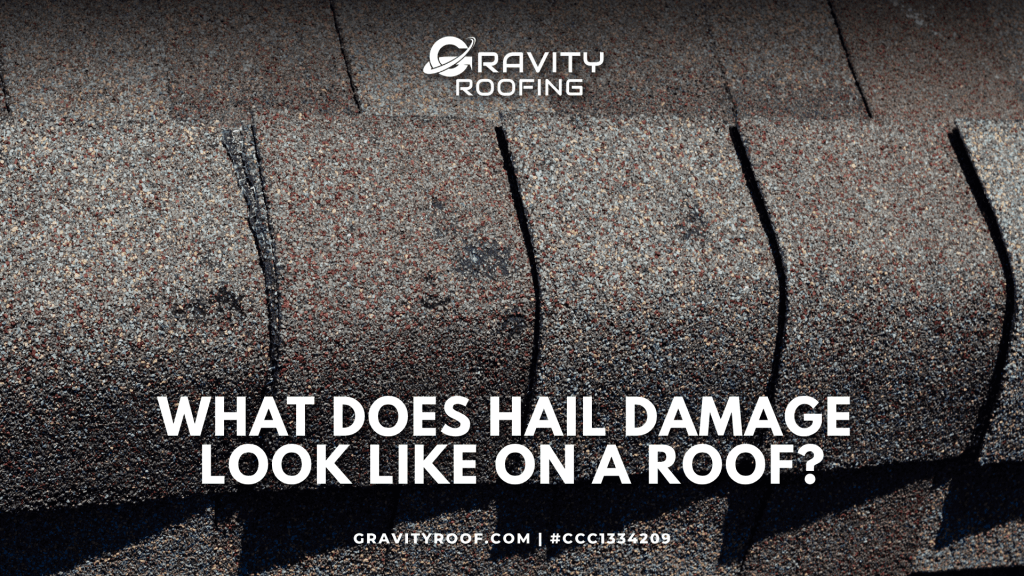
What does hail damage look like on a roof? On asphalt shingles, hail damage appears as dark, circular “bruises” or dimples where the protective granules have been knocked off, exposing the black asphalt underneath. You may also see cracked shingles, dented metal flashing, and heavy granule buildup in your gutters.
5 Urgent Signs of Hail Damage on Roof Shingles
Identifying hail damage on roof materials requires a trained eye, but there are several indicators you can look for from the ground or a ladder before calling a professional.
1. Circular Bruises and Dimples
This is the most common sign of hail damage on roof shingles. When a hailstone strikes, it knocks away the protective mineral granules, leaving a dark, circular spot. These “bruises” expose the underlying asphalt to the brutal Florida sun, which will cause the shingle to degrade rapidly and eventually leak.
2. Dented Metal Flashing and Vents
If you are wondering what does hail damage look like on a roof, look at the metal components first. Metal roof vents, chimney flashing, and even your gutters will often show clear, round dents from hail impacts. If the metal on your roof is dented, it is almost guaranteed that your shingles took a beating as well.
3. Cracked or Broken Shingles
Large hailstones or high-velocity impacts can crack the fiberglass matting inside the shingle. A cracked shingle is severely compromised and cannot effectively shed water. This type of hail damage on roof systems requires immediate attention before the next rainstorm.
4. Excessive Granule Loss in Gutters
While some granule loss is normal as a roof ages, a sudden, heavy accumulation of coarse black sand in your gutters or at the base of your downspouts after a storm is a major red flag. This indicates widespread hail damage on roof surfaces, meaning the protective layer of your shingles has been compromised.
5. Dented Air Conditioning Units or Mailboxes
Sometimes the easiest way to answer what does hail damage look like on a roof is to look at the rest of your property. If your outdoor AC unit has dented fins, or if your metal mailbox or car has fresh dings, your roof definitely sustained hail impacts.
Don’t Wait for a Leak to Act
“Hail damage is sneaky. It might not leak today or tomorrow, but six months from now, that bruised shingle will fail,” warns Taz Crumpler, President of Gravity Roofing.
Because hail damage on roof shingles is difficult to assess safely and accurately, you should always rely on a professional. Our Central Florida inspection team knows exactly how to identify and document hail impacts for your homeowners insurance claim. We will provide a comprehensive report and help you determine if you need a few minor repairs or a full roof replacement.
If a hailstorm recently passed through your area, contact Gravity Roofing today to book your free, no-obligation roof inspection or get an instant online roof estimate. Call us at (407) 461-0234 or visit us at 14 S Bumby Ave, Orlando, FL 32803.