


3 Ultimate Facts: What is a Roof Valley & Why It Leaks (2026)
When Central Florida homeowners experience a major roof leak during a summer thunderstorm, the water usually isn’t coming through the flat, open areas of the shingles. The vast majority of severe leaks occur at the joints where two slopes meet. If your roofing contractor tells you that you have a leak in this area, you are probably asking: what is a roof valley?
At Gravity Roofing, we spend a lot of time repairing this specific architectural feature because it handles the highest volume of water on your entire roof. Understanding how it works is key to protecting your home.
What is a roof valley?
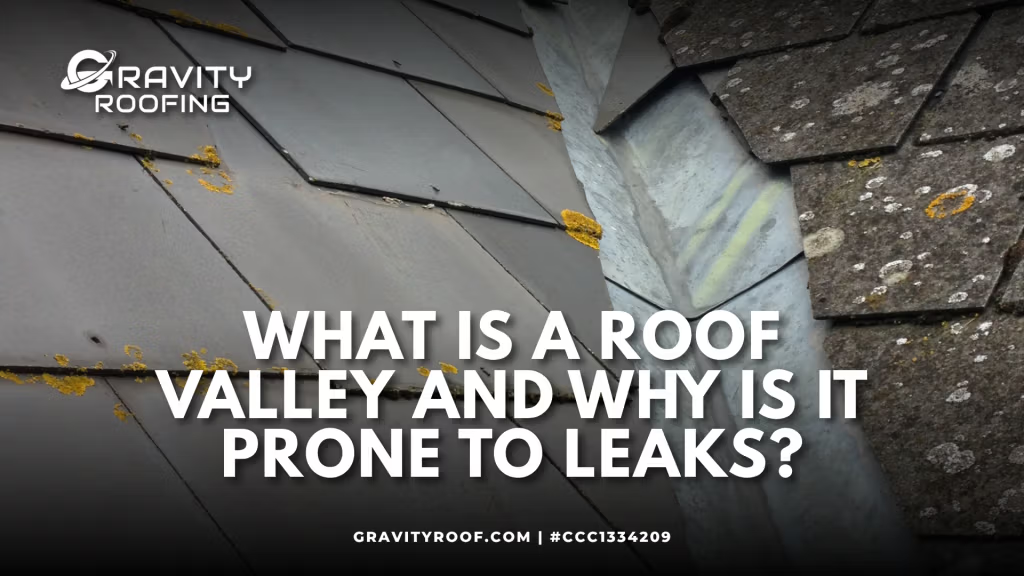
What is a roof valley? A roof valley is the V-shaped internal angle formed where two downward-sloping roof sections intersect. Because it acts as a channel to direct heavy rainwater off the roof and into the gutters, it is highly susceptible to leaks if not properly sealed and flashed.
3 Reasons Why a Roof Valley is Prone to Leaks
Now that you know what is a roof valley, it is easy to see why it is the weakest link in your roofing system. During a Florida downpour, hundreds of gallons of water rush through this narrow channel. Here are three reasons why it often fails:
1. Debris Accumulation
If you have large oak or pine trees near your home, the answer to what is a roof valley failure usually involves leaves. Leaves, pine needles, and twigs naturally wash down the slopes and get stuck in the valley. This debris acts like a sponge, holding moisture against the shingles and flashing long after the rain stops. Over time, this constant moisture rots the materials and causes leaks.
2. Poor Installation of Valley Flashing
Because the valley handles so much water, it requires special underlayment (often an ice and water shield) and heavy-duty metal flashing underneath the shingles. The National Roofing Contractors Association (NRCA) recommends proper flashing and installation practices to help prevent leaks in vulnerable roof areas.
3. “Closed” vs. “Open” Valley Wear and Tear
There are two main ways to install a valley. An “open” valley leaves the metal flashing exposed, while a “closed” valley covers the flashing with interwoven shingles. While closed valleys look more aesthetically pleasing, the shingles in the center of the valley endure massive amounts of rushing water and wear out much faster than the rest of the roof. If you are asking what is a roof valley leak, it often looks like bald, cracked shingles right in the center crease.
How Gravity Roofing Protects Your Valleys
“A roof valley is like a riverbed on top of your house,” explains Taz Crumpler, President of Gravity Roofing. “We never cut corners here. We use premium, self-adhering underlayment and heavy-gauge metal flashing to ensure that even during a hurricane, your valleys will not leak.”
If you have noticed a water stain on your ceiling that aligns with a V-shaped intersection on your roof, do not wait for the next storm. Our Central Florida inspection team will thoroughly examine the area, explain exactly what is a roof valley issue on your home, and provide a transparent repair estimate.
Stop leaks at the source. Contact Gravity Roofing today to book your free, no-obligation roof inspection or get an instant online roof estimate. Call us at (407) 461-0234 or visit us at 14 S Bumby Ave, Orlando, FL 32803.