
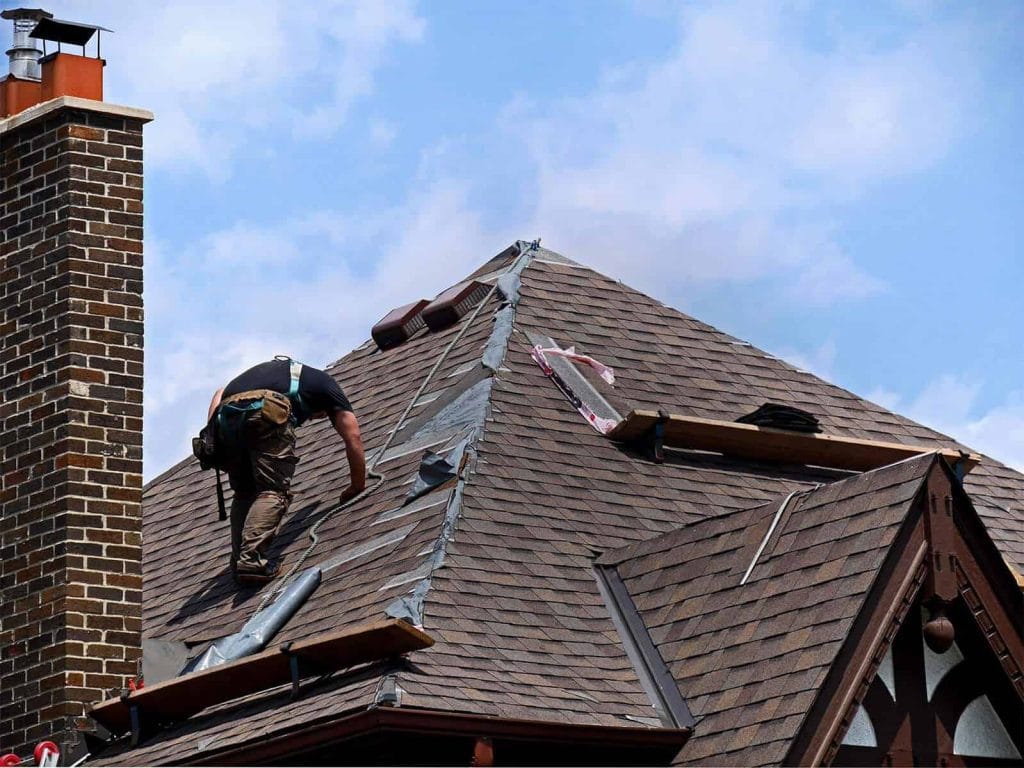
A roof repair in Orlando is rarely about the shingle you can see from the driveway. It’s usually about where water is getting in, how long it has been getting in, and whether the rest of the roof is healthy enough to justify fixing just that spot. This guide covers the repairs Central Florida roofs need most often, what’s urgent and what can wait, what delaying really costs here, and how to tell when repair stops making sense.
Quick answer: Treat active leaks, storm damage and anything you can see sagging as urgent. Lifted shingles, cracked pipe boots, loose flashing and clogged valleys are best fixed within days or weeks, before the next round of afternoon storms. Algae streaks and minor cosmetic wear can usually be scheduled. If leaks keep coming back in new places or the deck is soft, talk about replacement instead of paying for repair after repair.
The roof repairs Orlando homes need most often
Flashing and roof-to-wall leaks
Flashing is the metal that seals transitions: walls, chimneys, skylights, valleys and roof edges. In Florida heat, sealants dry out and flashing can loosen or corrode. Many “mystery” leaks start here, not in the middle of the roof. Learn more in what roof flashing is and why it leaks.
Pipe boots and roof penetrations
The rubber collars around plumbing vents can crack after years of sun. Water runs down the pipe and shows up as a ceiling stain in a bathroom or hallway. When the rest of the roof is sound, this is usually a straightforward repair.
Lifted, creased or missing shingles
Gusty summer storms can lift shingle tabs, break the seal and crease them. A creased shingle may look fine from the ground but no longer sheds water properly. Replacing damaged shingles and resealing the area is a standard repair when the surrounding roof is still in good condition.
Valley leaks
Valleys carry more water than any other part of the roof, and they collect leaves and debris from Orlando’s oaks and palms. When valleys clog or wear, water backs up under the roofing. See what a roof valley is and why it leaks.
Tile roofs: broken tiles and tired underlayment
On concrete tile roofs, the tile is only part of the system. Broken or slipped tiles let water reach the underlayment, and underlayment wears out over time even when tiles look fine. A good tile repair addresses both, not just the visible piece.
Flat and low-slope sections
Porches, additions and lanai roofs often have low-slope membranes. Ponding water, open seams and failed edge details are the usual culprits. These sections need different materials and methods than the main roof. Our flat roofing page explains the systems.
Urgent, soon, or can it wait?
- Urgent (call now): active leaks, water near light fixtures or electrical, sagging ceilings or roof sections, large areas of missing roofing after a storm, a tree or limb on the roof.
- Soon (days to weeks): a few missing or lifted shingles, cracked pipe boots, loose or rusted flashing, broken tiles, clogged valleys or gutters, small attic stains that have dried.
- Scheduled (plan it): algae streaks, cosmetic wear, minor granule loss on an otherwise sound roof, a pre-hurricane-season checkup.
For urgent situations, see our emergency roofing service. Gravity Roofing is not a 24/7 emergency service. Calling the office is the fastest way to reach our team, and urgent requests are prioritized as availability and conditions allow.
What to do in the first hours of a roof leak
- Stay safe. Keep water away from outlets and fixtures, and don’t climb onto a wet or damaged roof.
- Contain the water. Move belongings, use buckets and towels, and if a ceiling is bulging with water, keep people out of that room.
- Document it. Take dated photos and videos inside and, safely, from the ground outside. Note when the leak appears and in what kind of weather.
- Call a licensed roofer. If temporary protection like a tarp is needed, have it installed by professionals. Our guide on how to fix a leaking roof covers what homeowners can and can’t safely do.
What delaying a roof repair really costs in Central Florida
In a dry climate, a small leak can sit for a while. Here it rarely does. Humidity keeps materials damp and frequent storms keep adding water, so a small problem grows faster:
- Interior damage. Wet drywall and insulation are expensive to replace, and damp, warm spaces can grow mold.
- Rotten decking. Water that gets under the roofing softens plywood or OSB. Once decking rots, the repair grows from a few shingles to sections of the roof.
- Higher cooling bills. Wet insulation doesn’t insulate well, and a leaky attic lets hot, humid air in.
- Storm-season pressure. When a storm hits, every roofer’s schedule fills at once. Problems you fix before hurricane season are easier, calmer and usually cheaper than emergency calls after.
- Insurance complications. Insurers generally cover sudden damage, not long-term wear or neglect. A leak that’s been ignored can be harder to claim. Your policy decides; read our roof insurance claim guide for the basics.
Repair or replace?
A repair makes sense when the roof still has useful life, the problem is localized, and the deck is solid. It’s time to discuss replacement when:
- Leaks keep returning in different places.
- Shingles are curling, cracking or losing granules across large areas.
- The deck is soft or sagging in more than one spot.
- Storm damage covers multiple slopes.
- Repair costs are adding up year after year on an aging roof.
See the 7 signs your Orlando roof needs replacement, or compare the two paths in roof repair vs. replacement.
What a good repair visit looks like
Whoever you hire, a professional repair visit should include:
- A diagnosis that finds the source of the water, not just the stain.
- Photos of the problem area so you can see what the roofer saw.
- A clear explanation of the repair, what it will and won’t fix, and whether other areas need attention soon.
- A written price before work starts, and photos of the finished repair.
- A licensed contractor. You can verify any Florida roofing license on the state DBPR license search. Gravity Roofing’s license is CCC1334209.
Be careful with door-to-door offers after storms. Our guide to storm chasing contractors covers the red flags.
Keep small problems small
- Have the roof inspected before hurricane season and after major storms.
- Keep gutters and valleys clear, especially under trees.
- Trim branches that overhang or rub the roof.
- Check the attic a couple of times a year for stains or damp insulation.
- Consider a scheduled tune-up. Our roof maintenance service is built for Central Florida roofs.
Frequently asked questions
How do I know if my roof leak is an emergency?
Active water near electrical fixtures, a sagging or bulging ceiling, or large sections of missing roofing after a storm are urgent. A dry stain that appeared after one heavy rain is still worth a prompt inspection, but it’s usually not an emergency.
Can a roofer repair just one section of my roof?
Often, yes, if the rest of the roof is healthy and matching materials are available. If the surrounding roof is worn out, a patch may not hold for long, and a good roofer will tell you that.
Does Gravity Roofing repair tile, metal and flat roofs?
Yes. We work on shingle, metal, concrete tile, stone-coated steel and flat or low-slope roofs across Central Florida. See our residential roof repair services for details.
How soon should I fix a roof leak?
As soon as you can get it properly diagnosed. In Orlando’s humidity and storm patterns, small leaks tend to grow, and the repair gets bigger the longer water keeps getting in.
Get an honest answer on your roof
We’ll find the source, show you photos, and tell you whether a repair will do the job.