3 Ultimate Facts: What is Roof Underlayment & Why It Matters (2026)
When homeowners get a quote for a new roof, they usually focus entirely on the shingles—the color, the style, and the warranty. However, the shingles are actually just the first layer of defense. If you look closely at your estimate, you will see a line item for a material you probably haven’t thought much about. It often leads to the question: what is roof underlayment?
At Gravity Roofing, we consider the underlayment to be the most critical component of a Central Florida roofing system. If a hurricane blows your shingles off, the underlayment is the only thing keeping the water out of your living room. Here are the ultimate facts you need to know about this hidden protector.
What is the purpose of underlayment on a roof?
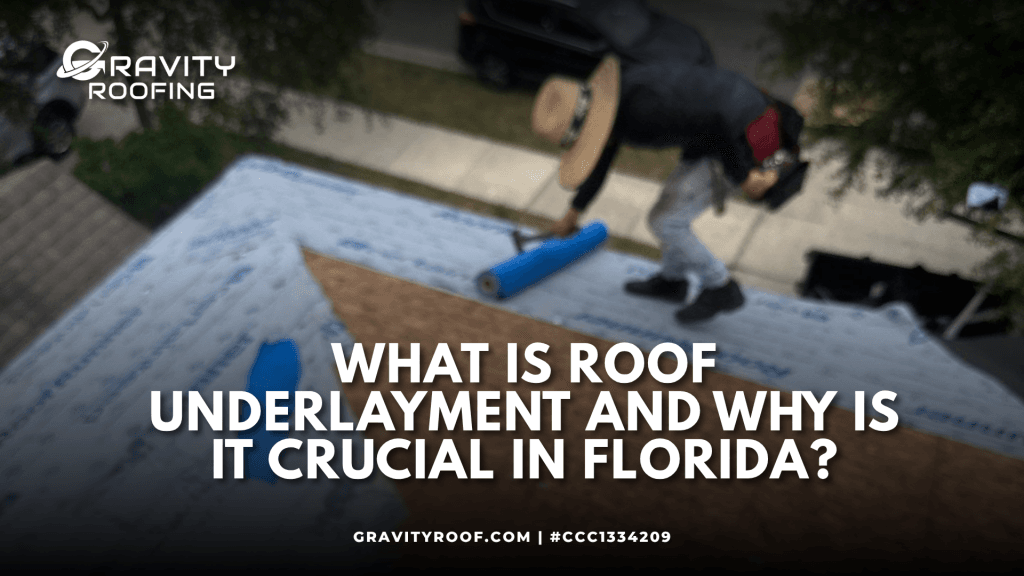
What is roof underlayment? Roof underlayment is a water-resistant or waterproof barrier installed directly onto the wooden roof deck before the shingles are applied. Its primary purpose is to protect the wood from moisture, wind-driven rain, and severe weather if the shingles are damaged or blown off.
3 Facts About Roof Underlayment in Florida
If you are asking what is roof underlayment and why you should care about the quality of it, here are three facts every Florida homeowner needs to understand:
1. It is Your Last Line of Defense in a Hurricane
During a Category 3 or 4 hurricane, even the best architectural shingles can be ripped off by 130+ mph winds. When that happens, the wooden plywood deck is exposed. If you are asking what is roof underlayment doing during a storm, the answer is: saving your house. A high-quality, peel-and-stick underlayment acts as a secondary waterproof seal. It prevents the torrential rain from rotting the wood and collapsing your ceiling, even if the shingles are gone.
2. Not All Underlayment is Created Equal
For decades, roofers used cheap “15-pound asphalt-saturated felt” (commonly called tar paper) as underlayment. In Florida, tar paper is practically useless. It tears easily, wrinkles in the heat, and absorbs water over time. When asking what is roof underlayment, you need to ensure your contractor is using modern synthetic underlayment or a premium peel-and-stick (self-adhering) membrane. These modern materials are tear-resistant and create a watertight seal around every nail hole.
3. It is Required by Florida Building Code
Because of the state’s severe weather, the Florida Building Code has strict requirements regarding underlayment. In many Central Florida jurisdictions, a secondary water barrier (like peel-and-stick underlayment) is legally required for all roof replacements. When asking what is roof underlayment, know that a reputable contractor will never cut corners here, as it will cause the roof to fail inspection.
Gravity Roofing Uses Only Premium Underlayment
“We never use cheap felt paper,” says Taz Crumpler, President of Gravity Roofing. “When a homeowner asks us what is roof underlayment, we explain that it is the most important part of the job. We use premium synthetic and self-adhering membranes because we want you to be safe when the big storms hit.”
If you are planning a roof replacement and want to ensure your home is protected by the best materials on the market, our Central Florida team is here to help.
Do not settle for a roof that only looks good on the outside. Contact Gravity Roofing today to book your free, no-obligation roof inspection or get an instant online roof estimate. Call us at (407) 461-0234 or visit us at 14 S Bumby Ave, Orlando, FL 32803.