

Best Roofing Material for Florida Climate: 5 Top Options for Altamonte Springs Homes
Best Roofing Material for Florida Climate — Overview
When you live in the heart of Seminole County, your home faces a unique set of environmental challenges. Choosing the best roofing material for the Florida climate is one of the most critical decisions Altamonte Springs homeowners can make. Situated near the bustling Uptown Altamonte and Cranes Roost Park area, properties here endure intense UV exposure and heavy summer thunderstorms. Whether you live in a quiet neighborhood like Spring Oaks or a larger estate near Lake Orienta, your roof must meet strict Florida Building Codes.
Table of Contents
Important Florida Notes Up Front
Product Approval: In Florida, roof system components must have Florida Product Approval (FL#) or a Miami-Dade NOA.
Wind Design: Most Altamonte Springs homes should be designed to withstand 120+ mph ultimate wind speeds. Your specific roof system and fastening schedule must meet the design pressures for your home’s location and geometry. (See 2023 Florida Building Code.)
Re-roof SWB: For most re-roofs, the 2023 Florida Building Code requires a Secondary Water Barrier (SWB) unless an exception applies.
Insurance Discounts: Florida insurers offer wind-mitigation discounts when qualifying features are present and verified by inspection. A compliant roof covering, proper deck attachment, SWB, and other features can help. Learn more from the Florida Office of Insurance Regulation.
Asphalt Shingles: Cost-Effective but Shorter Lifespan
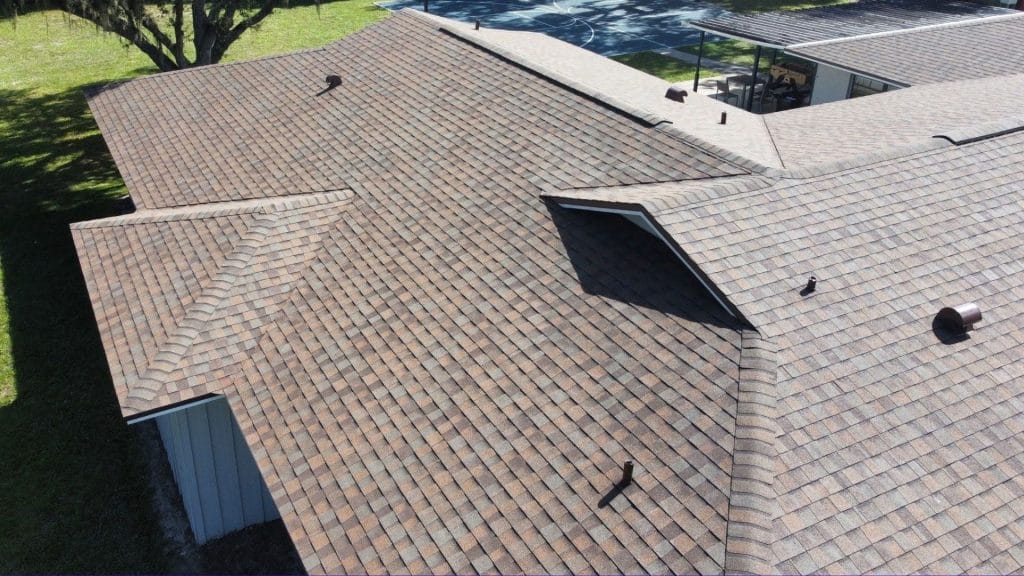
Asphalt shingles are the most common choice for Altamonte Springs homes. They are affordable and widely available, which makes them attractive for quick installations. In Florida’s climate, many 3-tab and older shingle roofs function for around 10–15 years, while architectural shingles often reach about 15–20 years with proper installation and maintenance. UV exposure, heat, and storms shorten service life compared with cooler regions.
Florida notes
- Contractors should verify and permit the shingle’s FL Product Approval and the fastening pattern for your wind zone.
- When re-roofing, ensure the required Secondary Water Barrier is included unless an exception applies.
- If your shingle roof is around 10–15+ years old or showing wear, schedule a free roof inspection in Altamonte Springs with Gravity Roofing to assess repair vs replacement.
Learn About Asphalt Shingle Roofing
Metal Roofing: One of the Best Roofing Materials for the Florida Climate
Metal performs exceptionally well in Florida. It reflects heat, resists corrosion, and, when correctly specified, can meet Altamonte Springs wind design. Many Florida-approved metal systems are engineered for ~140–150 mph design winds and can deliver 30–50 years of service with care. While the upfront cost is higher, homeowners often see savings from lower cooling bills and reduced repair frequency.
Florida notes
- Contractors should confirm that your project’s exact panel profile, substrate, underlayment, and clip/fastener package have a valid FL# or NOA.
- Your installer should provide calculations or documentation that the system meets design pressures for your home.
Tile Roofing: Timeless Florida Style
Clay and concrete tiles are a Florida classic. They resist fire, insects, and rot, and commonly last 30–50+ years. Underlayment typically needs replacement earlier than the tiles, which is a normal maintenance cycle.
Florida notes
- Weight matters. If you are switching from a lighter covering to tile, the structure must be verified for the added dead load and wind uplift. Engineering may be required by the building department.
- Use tile products and underlayments with FL Product Approval and follow the approved fastening schedule for your wind zone and exposure category.
Stone-Coated Steel Roofing: Premium Durability
Stone-coated steel offers a strong balance of durability and design. It withstands hurricane-force winds when approved and installed per Florida requirements, resists humidity-driven corrosion, and often lasts 40–70 years. It can mimic the look of tile, shake, or shingles while performing like metal.
Florida notes
- As with other coverings, verify that the exact brand, profile, underlayment, and fastening have a valid FL# and meet your design pressures.
Flat & Low-Slope Roofing Systems
For flat or low-slope sections, TPO, PVC, or modified bitumen are common. They can be waterproof, energy-efficient, and cost-effective, but they require regular maintenance and periodic inspections to stay watertight.
Florida notes
- Use membranes, insulations, and adhesives with FL Product Approval and follow the manufacturer’s approved details for perimeter and penetration attachment to meet wind pressures.
Protect Your Altamonte Springs Home with the Right Choice
Living in Altamonte Springs means dealing with intense heat and the unpredictable tropical systems of Central Florida. Your choice of roofing material directly impacts your home’s resilience and your cooling costs. By selecting Florida approved systems like metal or stone coated steel, you are making a long term investment in your family’s safety.
Book a Free Altamonte Springs Roof Inspection
Are you unsure if your roof is ready for the next storm season? Gravity Roofing specializes in helping Altamonte Springs neighbors navigate product approvals and wind design pressures. Book your free inspection today with Gravity Roofing or call (407) 461-0234.
Want a quick starting point? Orlando homeowners can use our Instant Roof Estimator to get a fast, ballpark price range in about 30 seconds, then book a free inspection for exact measurements and code verification. Click here to get your free estimates!
FAQs
What is the best roofing material for Florida homes?
Metal and stone-coated steel often deliver the best combination of durability, wind performance, and longevity. Architectural shingles remain popular for budget, and tile for style. Always confirm Florida Product Approval and that the system meets your home’s design pressures.
Which roof lasts longest in Altamonte Springs?
Stone-coated steel can reach 40–70 years. Many tile and quality metal systems also perform very well when properly installed and maintained. Underlayment replacement cycles apply for tile.
How do I know when to replace my roof?
As a practical guideline, if your shingle roof is around 10–15+ years or shows signs of damage, granule loss, curling, leaks, or storm wear, schedule a professional inspection to determine repair vs replacement. Typically, tile and metal roofs need to be replaced after 25+ years, but inspect periodically and address underlayment and flashing as needed.