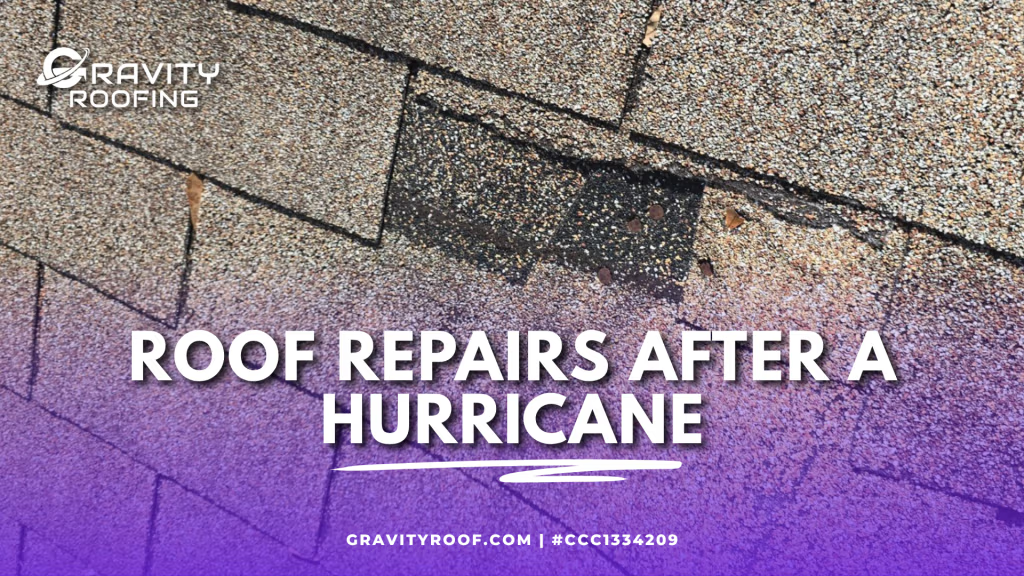
Roof repair after hurricane. Roof repair after hurricane damage starts with safety and a clear recovery sequence. Once officials say it is safe to return, document visible conditions, prevent further damage when appropriate, and arrange a professional assessment.
TL;DR: After a hurricane, put safety before repairs. Wait for official guidance before returning or moving around the property, document visible roof and interior conditions from safe locations, protect against further exposure with qualified help when needed, and keep every inspection report, estimate, receipt, and communication in one place. For coverage or claim questions, speak directly with your insurer or agent. Gravity Roofing can inspect the roof, document what it finds, and explain repair options—but cannot interpret your policy, negotiate a claim, or guarantee payment. Book your free roof inspection or call (407) 461-0234 when conditions are safe.
Last reviewed: August 2026
Important: This article is general educational information, not legal advice, insurance advice, policy interpretation, or a recommendation to file, delay, settle, dispute, reopen, or supplement a claim. Hurricane recovery is highly fact-specific. Your policy, deductible, local conditions, repair scope, permits, insurer, and the circumstances of the loss all matter. For questions about your own coverage or rights, contact your insurer, insurance agent, or an appropriately qualified Florida professional.
A hurricane can leave homeowners with more than a damaged roof. It can leave unanswered questions about safety, temporary protection, insurance, repairs, permits, and how to choose help when demand is high.
The most effective recovery plan is calm and sequential. Do not try to solve every problem at once. Start with safety, preserve the facts, get a professional roof assessment, and make decisions from documented information rather than fear or pressure.
Roof Repair After Hurricane: 7 Safer Recovery Steps
Roof repair after hurricane conditions can involve temporary protection, damage assessment, documentation, contractor verification, permitting, and permanent work.
1. Start with safety and official reentry guidance
Do not return to an evacuated area or begin property work until local officials say it is safe. Even after the sky clears, hazards can remain: downed power lines, floodwater, damaged structures, broken glass, nails, unstable trees, and wet electrical components.
Do not climb onto your roof, use a ladder near damaged areas, or attempt a DIY repair after a hurricane. A roof that looks manageable from the ground may be wet, structurally compromised, or hiding damage around flashing, decking, or penetrations.
If you have an active interior leak, move people, valuables, and electronics away from the affected area if it is safe to do so. Place a container under a drip when appropriate. Do not touch wet electrical fixtures or puncture a sagging ceiling. If conditions need professional attention, contact a qualified roofer to discuss the next appropriate step and the availability of emergency roofing services. Gravity Roofing does not promise overnight or 24/7 response, but can respond as quickly as possible during business hours.
2. Document visible conditions before cleanup changes them
Documentation is not about assuming a claim will be paid. It is about creating an accurate record of what happened at your home.
The Florida Department of Financial Services advises homeowners after a disaster to assess visible damage, use photos, videos, or written notes to record it, identify necessary emergency work to help prevent further damage, and retain professional-work receipts.[1]
Start a hurricane recovery folder and keep the following together:
| Record | What to capture |
|---|---|
| Storm timeline | Date of the hurricane, date you returned or first inspected, and when you first noticed each issue. |
| Exterior photos | Roofline from the ground, gutters, downspouts, damaged screens, visible debris, roof vents, and exterior water-entry clues. |
| Interior photos | Ceiling stains, drips, bubbling paint, wet drywall, damaged belongings, and areas near exterior walls. |
| Professional records | Roof inspection reports, photographs, temporary-protection invoices, repair estimates, and permits when applicable. |
| Communications | Dates, names, and a short summary of conversations with your insurer, adjuster, contractor, or other representatives. |
Do not throw away receipts for professional temporary work. Take photos before major cleanup when it is safe. A photograph records a condition; it does not determine the cause, full scope, or coverage of the loss.
3. Understand temporary protection versus permanent repair
Temporary protection and permanent repair are not the same thing.
A temporary roof tarp or other qualified protective measure may help reduce exposure to rain while the roof is evaluated and a repair plan is made. It is not a permanent repair, and it does not automatically establish insurance coverage. Do not install a tarp yourself on a damaged roof. The fall risk and the risk of further damage are real.
A permanent repair plan should be based on a professional roof assessment. FEMA explains that high winds can damage roof flashing and increase the risk of water intrusion from wind-driven rain. It identifies ceiling or attic staining as possible signs of water intrusion and recommends professional help for observed flashing concerns.[2]
| Situation | Appropriate next step |
|---|---|
| Active drip or visible exposure | Protect the interior safely, document the condition, and contact a qualified roofing professional promptly. |
| No active leak but visible roofline or exterior changes | Document from the ground and schedule a professional inspection. |
| New ceiling stain, musty odor, or bubbling paint | Photograph the symptom and have the source assessed; it may not be possible to identify the cause from the interior alone. |
| Debris in the yard or shingles on the ground | Photograph it where found, but do not assume it came from your roof without an assessment. |
| Home appears severely compromised | Stay out of unsafe areas and follow official direction before arranging further work. |
4. Get a professional roof assessment and a repair plan
After a hurricane, homeowners need facts more than assumptions. A professional roofing inspection can identify observable conditions, document roof-level findings safely, explain whether temporary protection is appropriate, and outline repair recommendations.
Gravity Roofing can inspect the roof, photograph observed conditions, and explain the repair options in plain language. The company provides storm damage roof repair and inspections for homeowners in Orlando and surrounding Central Florida communities.
A repair timeline cannot be promised immediately after a major hurricane. It can be affected by the safety of the area, the extent of damage, material availability, permitting and code requirements, insurer communications, weather, and demand for qualified labor. A trustworthy contractor should explain the variables, document the scope, and avoid promising a date it cannot control.
5. Keep insurance communication direct and organized
For coverage questions or to report a potential claim, contact your insurer or agent directly using the information in your policy. Ask what documentation they need, keep copies of what you submit, and write down the date, time, and name of each person you speak with.
Your insurer’s process may include requests for information, an adjuster assignment, inspection, and a written coverage or payment decision. Your policy and the facts of the loss control the outcome. A roofing contractor can provide roof observations, photographs, repair recommendations, and an estimate. It cannot interpret policy language, act as your insurer, negotiate the claim, or guarantee payment.
For a detailed Florida-specific overview of general claim notices, insurer communications, and hurricane deductibles, see Gravity Roofing’s guide to navigating roof insurance claims in Florida once it is published.
If an insurer’s estimate and a roofer’s estimate differ, do not assume either document is automatically wrong. Compare the scopes line by line, preserve both documents, and ask the insurer directly for clarification about its written position. For policy interpretation, legal rights, or a dispute, seek help from an appropriately qualified Florida professional.
6. Choose a contractor carefully after a hurricane
Major storms can create urgency—and urgency can make homeowners vulnerable to pressure. Before authorizing repair work, slow down long enough to understand who you are hiring and what you are signing.
Florida’s Department of Business and Professional Regulation provides an official portal to verify a license by name or license number.[3] License verification is an important first step, but it is not a guarantee of price, availability, workmanship, or fit for your project.
| Check | Why it matters |
|---|---|
| Verify the contractor’s Florida license | Confirms the license record through the official state search. |
| Ask for a written scope of work | Gives you a defined description of proposed repairs, materials, and exclusions. |
| Read every document before signing | Distinguish an inspection authorization, repair contract, financing document, or other agreement. |
| Request a copy of anything you sign | Keeps your records complete and reduces confusion later. |
| Ask about permits and code requirements | Local permitting and code needs can affect scope, sequencing, and timing. |
| Do not accept high-pressure tactics | A legitimate contractor should give you time to read, ask questions, and make an informed decision. |
7. Know where FEMA may fit—and where it may not
After a federally declared disaster, FEMA assistance may be available to eligible households for certain disaster-related needs. FEMA notes that it may be able to assist with disaster-related roof leaks that damage ceilings and threaten electrical components, but eligibility, program availability, and the facts of the damage matter.[4]
FEMA assistance is not the same as homeowners insurance, and it is not guaranteed. Check official FEMA and Florida emergency-management announcements after a declared disaster for current application details and eligibility information. Do not rely on a contractor or social-media post to determine whether you qualify.
8. Recovery takes a plan, not a rushed decision
The goal after a hurricane is to get your home protected, understood, and repaired safely. The order matters:
- Follow official safety and reentry guidance.
- Document visible conditions from safe locations.
- Address active exposure with qualified professional help when needed.
- Obtain a roof inspection and clear repair scope.
- Communicate directly with your insurer or agent for coverage questions.
- Verify the contractor, read the contract, and keep every record.
Protect your home. Protect your peace. When the storm has passed and it is safe to assess your property, book your free roof inspection or call (407) 461-0234. You will get clear roof findings and practical repair guidance—no pressure, just facts.
If you need roof repair after hurricane damage, Gravity Roofing can assess visible roof conditions and explain the next appropriate step.
Frequently Asked Questions
What should I do first after hurricane roof damage?
Put safety first. Follow official reentry guidance, avoid roof access and electrical hazards, document visible interior and exterior conditions from safe locations, and contact a qualified roofer if there is active water intrusion or visible roof damage. For coverage questions or to report a potential claim, speak directly with your insurer or agent.
How do I protect my house after hurricane roof damage?
If it is safe, move valuables away from an active drip and place a container underneath. Do not climb onto the roof or attempt a DIY tarp. Contact a qualified roofing professional to discuss temporary protection and repair options.
Should I get a roof inspection after a hurricane?
A professional inspection can document the roof’s observable condition, identify roof-level concerns that are not safe to assess from the ground, and explain recommended repair or monitoring steps. It does not guarantee an insurance result, but it gives you facts for your repair records.
What should I document before repairs begin?
Document the storm date, roofline from the ground, exterior damage, interior stains or leaks, debris, professional inspection reports, temporary-protection invoices, repair estimates, and communication notes. Keep every receipt and a copy of documents you submit or sign.
How do I choose a roofing contractor after a hurricane in Florida?
Verify the contractor’s Florida license through the official DBPR portal, request a written scope of work, read all agreements before signing, ask about permits and code requirements, request copies of documents, and avoid pressure to sign immediately. A license verification is an important step, but it does not guarantee the contractor’s price, availability, or workmanship.
Can FEMA help with hurricane roof damage?
After a federally declared disaster, FEMA assistance may be available to eligible households for certain disaster-related needs. FEMA says it may assist with disaster-related roof leaks that damage ceilings and threaten electrical components. Assistance is not guaranteed, and eligibility depends on the disaster program and individual circumstances.
How long do hurricane roof repairs take?
There is no reliable one-size-fits-all timeline. Timing can depend on safety conditions, roof damage, material availability, permits, weather, insurer communications, and demand for qualified labor after the storm. A contractor should explain the known variables and provide updates rather than promise a date it cannot control.
What should I do if my insurance estimate and roofer’s estimate are different?
Keep both documents, compare the scopes line by line, and ask the insurer directly for clarification about its written position. A roofing contractor can explain its repair scope and observed roof conditions. For policy interpretation, legal rights, or a dispute, seek advice from an appropriately qualified Florida professional.
References
- Florida Department of Financial Services, Post-Disaster Insurance Claims
- Federal Emergency Management Agency, Check Your Roof Flashing
- Florida Department of Business and Professional Regulation, Hurricane Resources and License Verification
- Federal Emergency Management Agency, What Home Repairs Are Covered by FEMA and Which Are Not?
- Florida Department of Financial Services, Hurricane Resources