
Gravity Roofing
TPO Roofing for Central Florida Homes
If part of your home has a flat or low-slope roof, you’ve probably heard the term TPO. It’s a single-ply roofing membrane that’s become a popular choice for the flatter parts of a house, like a family-room addition, a covered porch or the roof over a lanai. This page explains what TPO is, where it fits on a home, how we repair and replace it, and how to tell if it’s the right choice for you.
01
What Is TPO?
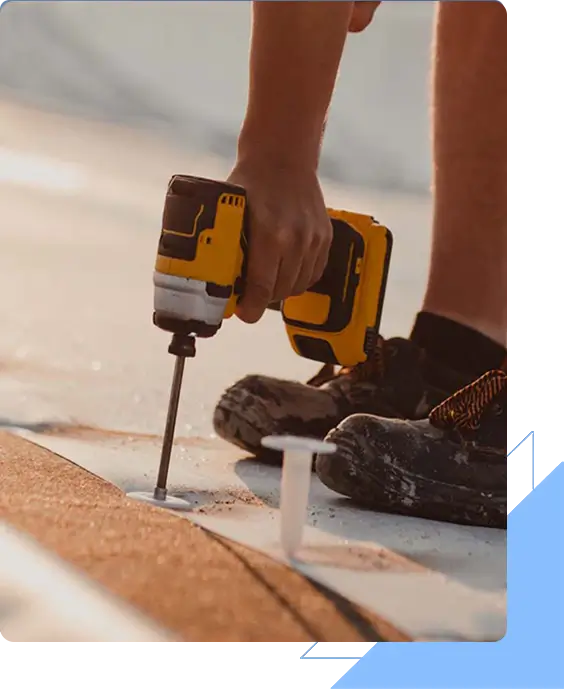
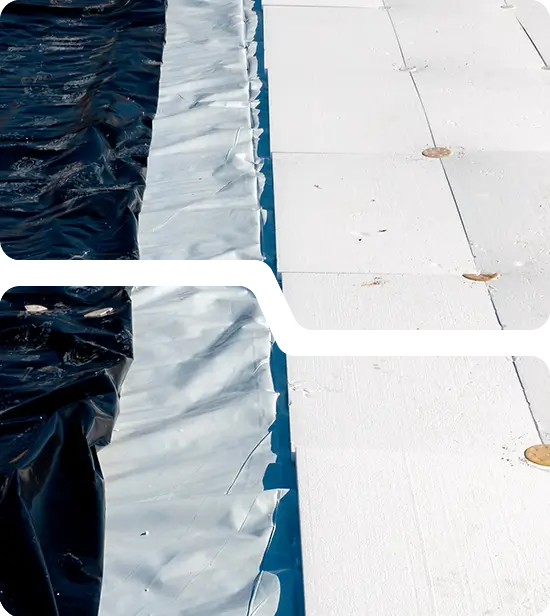
TPO stands for thermoplastic polyolefin. It comes in wide, flexible sheets that are fastened or adhered over the roof deck. Where two sheets overlap, the seams are heat-welded with hot air, which fuses them into one continuous piece.
For homeowners, a few things make TPO appealing:
- Heat-welded seams create a watertight bond where many low-slope leaks would otherwise start.
- A light-colored, reflective surface helps the roof absorb less of the Florida sun.
- Flexibility helps the membrane handle the daily heat-and-cool cycle of Central Florida weather.
- Clean, low-profile appearance that works well on modern designs and additions.
Where TPO Fits on a Home
Most Central Florida homes have a pitched main roof. TPO is for the sections that don’t have enough slope for shingles or tile to shed water well. Common spots include:
- Home additions built with a low roof to stay under the existing roofline
- Lanais and covered outdoor living areas
- Porch and patio roofs that transition off the main roof
- Attached or converted garages
- Homes with larger flat sections or a contemporary low-profile design
TPO is one of the systems we install on residential low-slope areas. Our flat roofing page compares it with our other primary low-slope system, so you can see the options side by side.
Why Low-Slope Sections Need the Right System
Shingles work because gravity pulls water quickly down a steep roof. On a low-slope section, water moves slowly, and during one of our summer downpours it can sit on the surface for a while before it drains. That’s why these areas need a continuous membrane instead of overlapping pieces. If you’d like to understand slope and drainage better, our low-slope roofing guide covers it.
The details matter just as much as the membrane. The places where a low-slope roof meets a wall, the main roof, a skylight or a vent pipe are where leaks tend to begin, so those transitions get extra care during installation.
Gravity Roofing LLC
TPO Roof Repair
TPO is tough, but it isn’t indestructible. A falling branch, storm debris or foot traffic can puncture the membrane, and seams or flashing can wear over time. The good news is that many TPO problems can be repaired without replacing the whole roof.
Because TPO is heat-weldable, a repair patch can be fused to the existing membrane so it becomes part of the roof rather than sitting on top of it. We use this approach for punctures, tears and small damaged areas.
If your low-slope section is leaking, look for water stains on the ceiling under the porch or addition, soft spots, or water that stays on the roof long after a storm. Our residential roof repair team can track down the source.
TPO Roof Replacement
Repairs only go so far. Replacement is usually worth considering when:
- Leaks keep returning in different spots
- Seams are separating in several places
- The membrane is brittle, cracked or worn through
- There’s moisture trapped under the membrane or soft decking
- Water regularly ponds because the original drainage wasn’t designed well
A replacement is also a chance to fix the things that caused problems the first time, such as poor drainage, weak flashing details or damaged decking. If the roof is still sound but showing its age, a roof coating may be another option to discuss. For more help weighing it up, read roof repair vs. replacement.
What to Expect When You Work With Us
- Free roof assessment. We look at the low-slope section, drainage, transitions and the roof deck where we can.
- A clear recommendation. Repair, coating or new TPO, with the reasons explained in plain language.
- Careful installation. Old material is removed where needed, decking is checked, and the new membrane is installed with heat-welded seams and proper flashing.
- A final walkthrough so you know what was done and what to watch for.
Already have a TPO section and want it checked? Our roof inspection team can look it over, especially after a big storm.
TESTIMONIALS
WHAT OUR CLIENTS SAYS?
Gravity Roofing
Frequently Asked Questions
Is TPO a good choice for a house?
TPO can be a great choice for the flat or low-slope parts of a home, like additions, porches and lanais. It isn’t meant for the steep main roof, where shingles, tile or metal usually make more sense.
Can a TPO roof be repaired, or does it need to be replaced?
Many TPO problems, like punctures and small tears, can be repaired with heat-welded patches. If damage is widespread, seams are failing in several places, or there’s moisture under the membrane, replacement is often the better long-term choice.
Does TPO help in the Florida heat?
TPO is usually light-colored and reflective, so it absorbs less heat from the sun than a dark roof surface. That can help rooms under the roof stay more comfortable.
How do I know if my low-slope roof needs attention?
Watch for ceiling stains below the section, water that sits on the roof long after rain, visible tears or bubbles, and flashing that’s pulling away. A professional inspection will confirm what’s going on.
Get a Free Roof Assessment
Thinking about TPO for your addition or lanai, or worried about an existing low-slope section? We’ll take a look and tell you what we’d do if it were our own home. It’s not rocket science, just really good roofing.
Schedule your free roof assessment or call (407) 461-0234. Gravity Roofing, 14 S Bumby Ave, Orlando.