


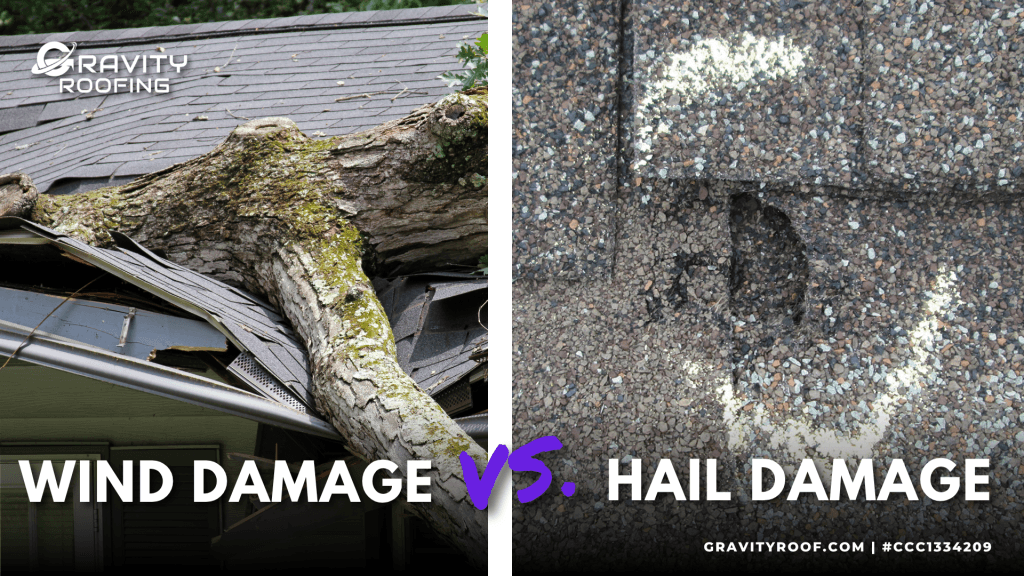
Wind damage vs hail damage. Wind damage vs hail damage can look different, but both may create roof concerns that are difficult to assess safely from the ground. Understanding the basic difference can help homeowners document clues without trying to self-diagnose.
TL;DR: Wind and hail can damage a roof in different ways. Wind tends to move, lift, loosen, or displace roofing materials and transitions. Hail tends to strike, dent, bruise, crack, or knock away protective granules. But the clues can overlap, and a photo from the ground cannot reliably prove what happened or what repair is needed. After a storm, document what you can see safely, avoid ladders and roof access, and schedule a professional assessment if you have concerns. Book your free roof inspection with Gravity Roofing or call (407) 461-0234.
Last reviewed: August 2026
Central Florida storms can bring strong wind, heavy rain, hail, and debris in the same event. That can make a simple question—“Was it wind damage or hail damage?”—harder to answer than it sounds.
The answer matters because wind and hail place different kinds of stress on a roof. Still, homeowners should not try to diagnose the cause from one photo, a few granules in the gutter, or a neighbor’s roof repair. A professional inspection looks at the full roof system, the visible pattern of conditions, and the context of the event.
Wind Damage vs Hail Damage: 5 Key Differences
When comparing wind damage vs hail damage, remember that visible clues can overlap and a professional assessment is the right way to identify the actual condition.
The simple difference: wind moves; hail impacts
At a high level, wind damage is created by force that pulls, lifts, shifts, or loosens roofing components. Hail damage is created by impact force that dents, bruises, cracks, or removes protective surface material.
| Storm force | What it can do to a roof | Why it can be hard to spot |
|---|---|---|
| Wind | Lift shingle edges, loosen sealant bonds, displace flashing, affect ridge caps, move debris, and create openings for wind-driven rain | Materials may look mostly intact from the ground even when an edge, seal, or transition has been compromised. |
| Hail | Strike roofing materials, knock away granules, bruise or crack shingles, and dent vulnerable metal components such as vents or flashing | Impact effects can be subtle, and not every mark or granule pattern has the same cause. |
| Wind + hail + rain | Combine movement, impact, and water exposure in the same storm | One condition can hide or complicate another, especially once rain and debris are involved. |
CertainTeed notes that high wind can lift or loosen shingles and that wind-driven rain can enter small gaps. The manufacturer also explains that hail impacts can weaken shingles, flashing, vents, and other roof components.[1] [2]
What wind damage may look like
Wind does not need to remove a shingle completely to create a concern. High wind can pull at shingle edges, stress fasteners or sealant bonds, and disturb materials around roof transitions. GAF describes this force as wind uplift: wind can catch shingle edges and loosen or peel materials even when they do not blow away.[3]
| Possible wind-related clue | What it may mean—and what it does not prove |
|---|---|
| Shingles, ridge-cap pieces, or metal fragments in the yard | Roofing material may have been displaced, but a professional should confirm where it came from and how the roof is affected. |
| A visible change along the roof edge or ridge | A raised, uneven, or missing-looking area may deserve an assessment. |
| Bent or shifted flashing around visible transitions | Wind can affect flashing and seals, but the exact condition may not be clear from the ground. |
| New interior stain after a windy rainstorm | Wind-driven rain may have found a vulnerable area, but an interior stain does not identify the entry point by itself. |
| Debris or branches against the roofline | Impact and movement can affect roofing surfaces, drainage, or transitions. |
Wind damage often becomes most noticeable during the next rainstorm. A lifted edge or separated seal can allow water to enter later, even when the roof did not leak during the original event. That is why a calm post-storm assessment can be useful after strong winds.
For a deeper look at wind-related concerns, read The Hidden Dangers of Wind Damage to Your Roof once Blog 02 is published.
What hail damage may look like
Hail damage comes from impact rather than movement. CertainTeed explains that hail can loosen and shed protective shingle granules, bruise roofing materials, and create cracks or underlying damage that may not be obvious to an untrained eye.[2]
| Possible hail-related clue | What it may mean—and what it does not prove |
|---|---|
| Dents on visible metal roof vents, flashing, gutters, or downspouts | Hail can leave impact marks on metal, but a dent alone does not establish the full roof condition. |
| Darkened or bare-looking areas on shingles | Granule loss or impact may be present, but aging, debris, and other conditions can also affect appearance. |
| Granules in gutters or at downspouts | Granule loss may deserve attention, especially after a hail event, but amount and cause require context. |
| New cracks, splits, or broken exterior components | Hail or debris impact may be a factor, but a professional should assess the component and surrounding area. |
| Hail still visible on the ground after the storm | This helps document that hail occurred, but it does not by itself confirm roof damage. |
Hail can affect a roof without creating an immediate visible leak. That does not mean every hailstorm damages every roof. It means the absence of a ceiling drip is not enough to rule out a roof concern after a meaningful hail event.
For a safety-first post-hail action guide, read What to Do After a Hail Storm once Blog 03 is published.
Why the two types of damage can overlap
A severe thunderstorm can produce wind, hail, rain, and debris at nearly the same time. A dented gutter might point to hail impact. A lifted shingle may point to wind stress. A cracked shingle may be linked to impact, age, wind movement, or a combination of conditions. Rain can then take advantage of whatever opening already exists.
That is why the most responsible answer to “Is this wind or hail damage?” is often: the visible clue is worth documenting, but the roof needs a professional assessment before anyone identifies the cause or recommends a repair.
The goal is not to turn homeowners into storm-damage experts. The goal is to help them notice what is worth checking before a small issue becomes a larger water-intrusion problem.
What to photograph after wind or hail
Once the storm has passed and it is safe to be outside, take photos and short videos from the ground. Keep them factual and organized.
- Photograph the roofline from multiple sides of the home.
- Capture visible dents on gutters, downspouts, vents, screens, or other exterior components.
- Photograph roofing material, branches, or debris found in the yard before moving it, if it is safe to do so.
- Record interior stains, drips, damp drywall, bubbling paint, or other changes you noticed.
- Note the date, approximate time, and the neighborhood or part of the home affected.
- Save professional inspection reports, photographs, and invoices in the same folder.
Do not climb a ladder, walk on the roof, bend flashing, pull on shingles, or handle wet electrical components for a better photo. CertainTeed advises homeowners to leave roof-level inspection to trained professionals because roof access can be dangerous after a storm.[4]
For a detailed record-keeping system, see How to Document Storm Damage for an Insurance Claim once Blog 10 is published.
When to schedule a professional inspection
A professional inspection is worth considering after a storm if you noticed active water intrusion, new interior stains, roofing materials in the yard, visible changes along the roofline, impact clues on metal components, a debris strike, or a storm that produced meaningful wind or hail in your immediate area.
An inspection is also reasonable when you are not sure. It is a fact-finding appointment, not a promise that you need a repair or replacement. Gravity Roofing can assess observable roof conditions, take roof-level photographs when safe, explain what was found, and provide a repair recommendation if one is appropriate.
The team does not interpret insurance policies, determine coverage, negotiate claims, or guarantee an insurance or repair outcome. For a clear explanation of the inspection process, read What to Expect During a Professional Roof Inspection once Blog 13 is published.
Protect your home. Protect your peace. Wind, hail, and rain can leave different clues—but you do not have to diagnose them alone. Book your free roof inspection or call (407) 461-0234 for a clear, professional assessment in Central Florida.
If you are unsure whether a storm caused wind damage vs hail damage, Gravity Roofing can inspect the roof and explain what is found.
Frequently Asked Questions
How can I tell if roof damage is from wind or hail?
Wind damage may involve lifted, shifted, loose, or missing materials, while hail damage may involve impact clues such as dents, bruising, cracks, or granule loss. The signs can overlap, so a ground-level photo cannot reliably prove the cause. A professional assessment evaluates the full roof condition and context.
What does wind damage look like on a roof?
Possible wind-related clues include missing or shifted shingles, raised edges, damaged ridge caps, disturbed flashing, roofing material in the yard, debris impact, and water intrusion after wind-driven rain. These clues can warrant an inspection, but do not prove a specific cause by themselves.
What does hail damage look like on a roof?
Possible hail-related clues include dents on metal vents, flashing, gutters, or downspouts; impact marks; granule loss; and cracked or bruised-looking roofing materials. Hail damage can be difficult to see from the ground and should be assessed professionally.
Can wind and hail damage happen in the same storm?
Yes. Severe thunderstorms can produce wind, hail, rain, and debris at the same time. The combined effects can create overlapping clues, which is one reason a professional inspection is more reliable than a self-diagnosis.
Can hail damage a roof without causing an immediate leak?
Yes. Some hail-related effects can be subtle and may not produce an immediate interior drip. That does not mean every hail event damages every roof; it means a lack of a leak does not rule out a roof concern after a significant hailstorm.
Can wind damage cause a leak later?
Yes. Wind may lift or loosen roofing materials or affect transitions where wind-driven rain can later enter. An interior stain or drip does not identify the entry point by itself, so a professional assessment is appropriate when new symptoms appear.
What should I photograph after wind or hail?
From safe locations, photograph the roofline, visible exterior dents, damaged gutters or vents, debris, roofing material in the yard, and interior stains or drips. Note the storm date and when you first noticed each condition. Do not climb onto the roof or a ladder for better photos.
Do I need a professional inspection after a wind or hail storm?
Consider an inspection if you have active leaks, new stains, visible roofline changes, roofing material in the yard, dents on related exterior components, debris impact, or a significant storm in your immediate area. An inspection is a fact-finding step, not an automatic repair or replacement recommendation.